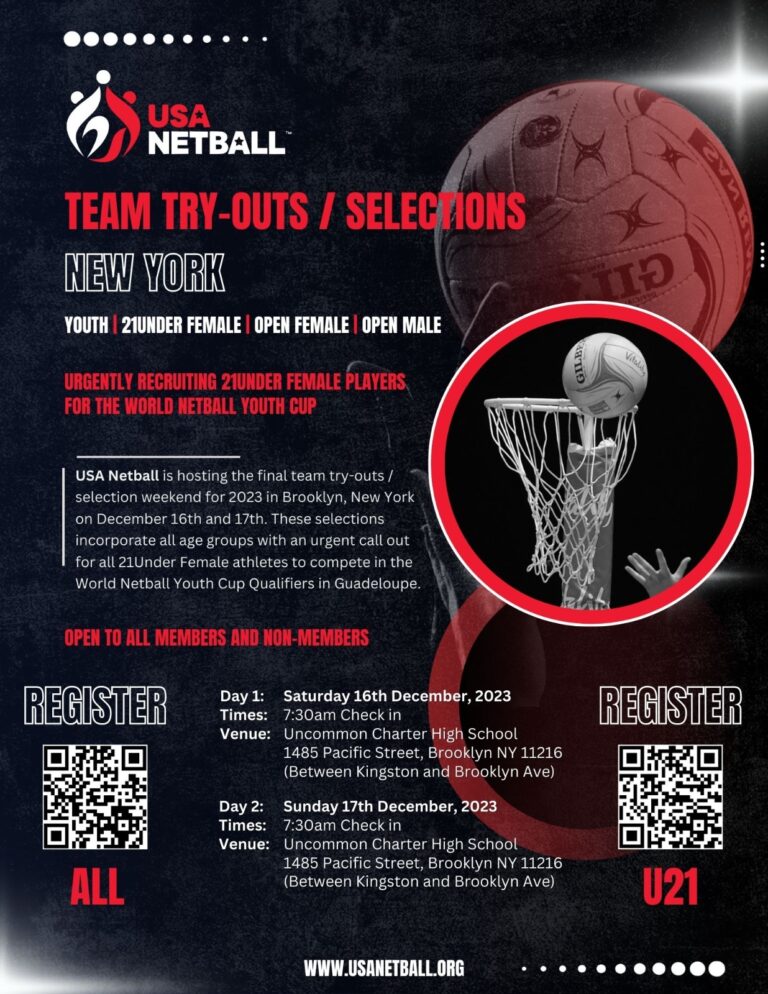



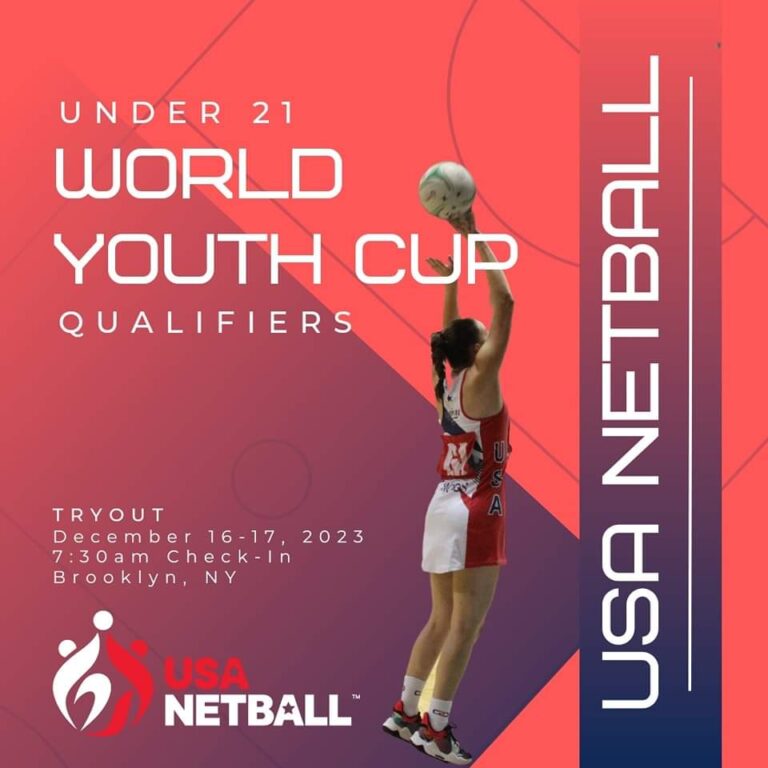
 Another tryout opportunity is here, especially for our Under 21 players! If you want to represent the USA at the Netball World Youth Cup Qualifiers next year, join us in New York for our next Tryout & Training Camp!
What you need to know: December 16-17, 2023 (both days)
 7:30am check-in (both days)
 Uncommon Charter High School (1485 Pacific Street, Brooklyn, NY 11216)
We can't wait to see you there!
Uncommon Charter High School (1485 Pacific Street, Brooklyn, NY 11216)
We can't wait to see you there!
Another tryout opportunity is here, especially for our Under 21 players! If you want to represent the USA at the Netball World Youth Cup Qualifiers next year, join us in New York for our next Tryout & Training Camp! December 16-17, 2023 (both days) 7:30am check-in (both days) Uncommon Charter High School (1485 Pacific Street, Brooklyn, NY 11216)
We can't wait to see you there!